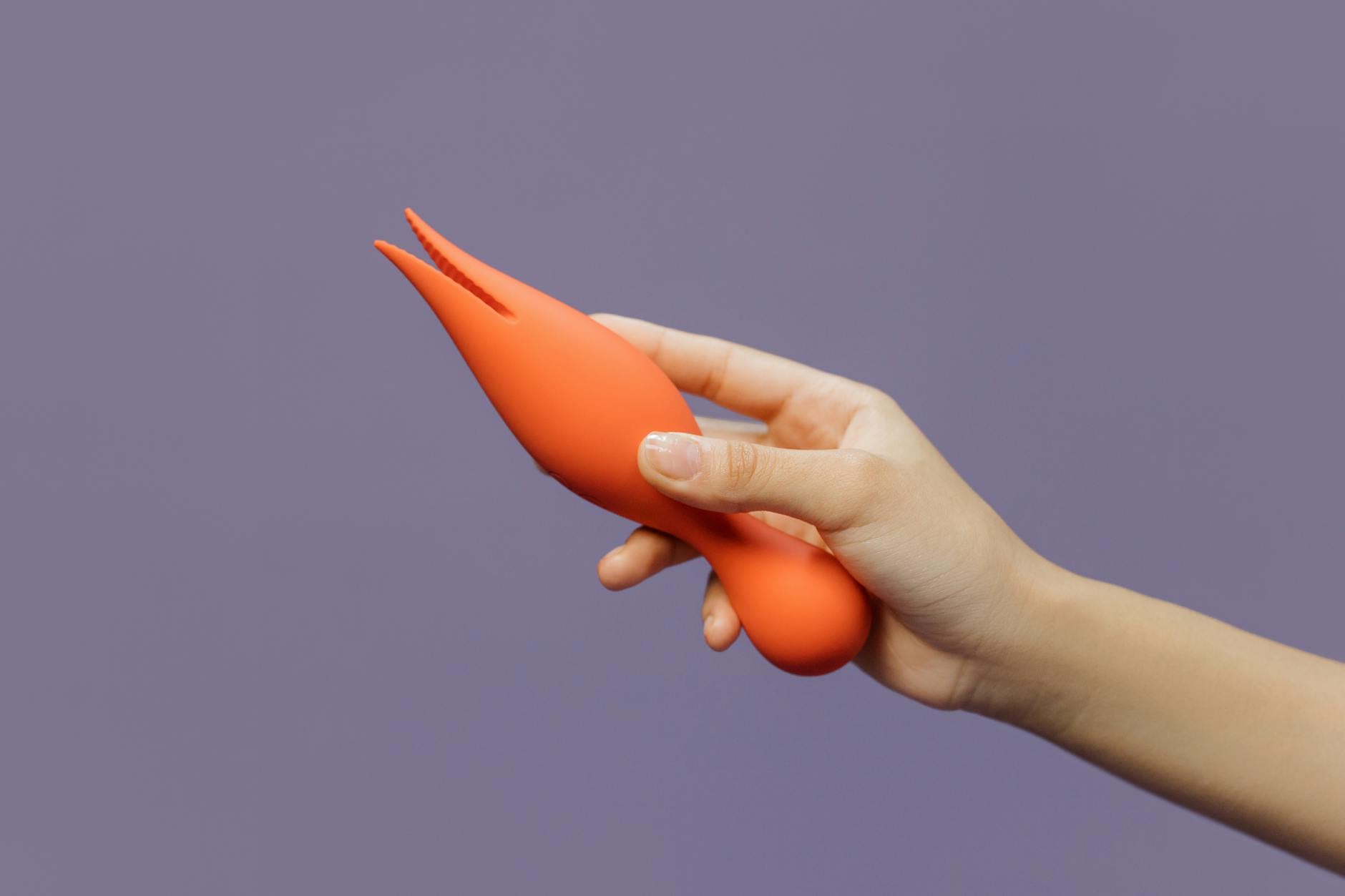
Most conversations about it start in the wrong place. Partners worry it means one person isn't enough, or that they're being replaced, or that someone's admitting the sex isn't working. None of those are actually true. Adding a lemon clitoral vibrator to couples' pleasure is like adding seasoning to a dish you already enjoy. It's enhancement, not indictment.
I see couples every week who use a lemon vibrator together and report that it's genuinely transformed how they connect. Not because the toy is magic, but because it forced them to actually talk about pleasure, take turns paying attention to each other's body, and get curious instead of stuck in a routine.
The trick is approaching it from the right angle from the start.
Understand the real motivation before you say yes or no to anything.
Often, a partner brings this up because they've noticed something. Maybe your pleasure has gotten harder to access. Maybe they want to see you come more reliably during sex so they can feel that connection. Maybe they're bored with the rhythm and want to explore something that requires actual presence and attention from both people.
Rarely, it's because they're unsatisfied with you. It's because they want more of you.
The second thing: introducing a lemon clitoral vibrator into couples' sex usually means someone has done research. They've thought about this. They haven't just grabbed something off a shelf. That's worth acknowledging, because it means there's already investment in making something better.
Don't wait for them to bring it up again after you've dismissed it. Bring it up yourself, on neutral ground, when neither of you is naked or in the middle of sex.
Here's what works: "I've been thinking about what you mentioned, and I'm curious about it." Then ask questions instead of making it about you feeling inadequate.
"What would feel good to you about that?" "Have you used anything before?" "What are you imagining?" "Would this change what we already do, or add to it?"
The Lemon Suction's lemon vibrators are designed around clitoral pleasure specifically, which means they're not about penetration or replacement of anything. They're about sensation that works differently than hands alone. That's a useful detail to land on early.
Don't introduce the lemon clitoral vibrator during sex the first time. That's too much pressure on both of you.
Instead, use it solo first. Let your partner watch or just know you're exploring. This does two things. One, you actually figure out what feels good without an audience. Two, it removes the weird pressure that the first time together has to be perfect.
When you're ready to bring it into partnered sex, start with foreplay, not the main event. Use the lemon vibrator on yourself while your partner touches you elsewhere. Or let them hold it while you guide their hand. This lets you both get comfortable with the sensation and the rhythm before anyone's trying to coordinate multiple things at once.
You holding it, them inside you. This gives you full control of the pressure and timing on your clitoris while your partner provides the other sensation. You can also use it while your partner is thrusting or staying still, depending on what feels good. Start slow and low intensity on the lemon vibrator. You can always go higher.
Them holding it. This requires communication because they can't feel what you're feeling. Guide their hand. Tell them when you want to go higher or lower on the intensity settings. The Lemon Suction's lem vibrator has accessible buttons, so switching patterns is easy mid-motion. Some partners find this position hot because it keeps their hands free to touch you elsewhere.
You on top, you controlling it. Tons of people find this position works best for couples because you have all the control. Your partner can pay attention to your face, your body, your pleasure instead of worrying about the mechanics.
Start with whatever feels least awkward. Awkwardness fades fast once you realize nobody's judging and the sensation actually feels really good.
Here's what can go wrong: you or your partner turns this into a performance test. "Did you come? Did that work? Should we try a different pattern?"
That's the fastest way to make pleasure disappear.
The point of a lemon clitoral vibrator in partnered sex is not guaranteed orgasms. It's not about fixing anything that's broken. It's about exploration and closeness and trying something together. Sometimes it leads to really intense pleasure. Sometimes it's just nice. Sometimes it takes a few tries to find what works.
All of that is fine.
If orgasm doesn't happen the first few times, that's normal. Your brain might be too busy thinking about the logistics. The sensation might feel different than expected. You might need more time to warm up. You might need a different pattern. None of this means the lemon vibrator isn't working or that your partner made a mistake suggesting it.
Talk about what feels good instead of what didn't. "I liked it when you slowed down." "That pattern felt better than the first one." "I want to try it again." Simple feedback, no shame.
Sometimes after introducing a lemon clitoral vibrator, a partner gets insecure. They think you prefer the toy to them. You need to address this directly.
The truth: a lemon vibrator can't hold you. It can't kiss you. It can't notice when something's wrong. It can't build a life with you. What it can do is create a sensation your hand or your partner's hand alone can't replicate. That's it. That's the whole job.
There's nothing threatening about that unless you make it threatening by avoiding the conversation.
If your partner is struggling, slow down and check in. Maybe go back to using the lemon vibrator without penetration for a bit. Maybe take a break and use it solo instead of together. There's no rule that says couples have to use toys together just because one person wants to. You can both use them separately and talk about it, and that's a perfectly valid form of intimacy too.
Most couples don't use a lemon clitoral vibrator every single time they have sex. That's fine and normal. It becomes one option in the toolkit, not the main event.
You'll probably find it works best for certain moods or moments. Maybe you use it when you're rushing because you know it gets you there faster. Maybe you use it when you want to feel more present and connected. Maybe you use it when partnered sex has felt routine and you want to shake things up.
The couples I work with who sustain this long-term treat it like seasoning. Sometimes you use it. Sometimes you don't. The goal is having options so sex doesn't get stuck in one gear.
That's actually what makes couples happier over time. Not the toy itself. The fact that they're still willing to try new things together.
That's totally fine. They don't have to. You can hold it yourself while they do other things. You can ask them to hold it but then you control the intensity and pattern. The toy is there to serve both people's pleasure, not force participation from anyone uncomfortable.
No. Clitoral vibrators work by stimulating nerve endings differently than hands do. It's not numbing. It's more like how your ear hears a guitar differently than a piano even though both are music. Different sensation, same nerve endings, same capacity to enjoy all forms of touch.
Be direct about it. "A good one costs about $89, and I want to invest in something that works well and lasts." If cost is a concern, talk about it. Some partners split the cost. Some see it as one person's purchase they're willing to make for both people's pleasure. There's no one right way.
Then you stop using it. You don't have to keep trying something that doesn't work. But also give it two or three times, because the first time is almost always awkward. If after three tries it's still not landing, you have an answer and you move forward knowing what doesn't work for you.
No. Absolutely not. Using a toy every time can make sex feel obligatory instead of fun. Use it when you want to. Skip it when you don't. The option existing is the whole point.
You ask. "Do you actually want to do this or are you just suggesting it?" People are sometimes scared to say no. Make it easy for them to opt out without judgment.
Introducing a lemon clitoral vibrator when your partner wants shared pleasure isn't complicated if you approach it from curiosity instead of obligation. Talk first. Try it alone. Move slow. Check in. Adjust what doesn't work. Keep going if it feels good.
Most importantly, remember that a toy isn't fixing anything. It's adding. Adding options, adding sensation, adding a reason to pay attention to each other's bodies in a way that might have gotten boring.
That's what actually strengthens couples over time. Not the toy. The willingness to show up and try.