
Here's the thing about numbness during pleasure
You're not broken. Reduced sensation—that muffled, distant feeling when you're touching yourself or being touched—is one of the most common issues nobody talks about. It shows up suddenly, or it creeps in gradually over months. Either way, it's disorienting because pleasure is supposed to feel sharp and electric, not like you're experiencing it through a thick blanket.
The real news: it's almost always fixable. And understanding why it happens is the first step to getting sensation back.
What actually causes numbness during pleasure
Sensation dulls for a handful of specific reasons, and most of them are reversible.
Nerve compression from chronic tension. This is probably the most common culprit. If you've been stressed, anxious, or holding tension in your pelvic floor for weeks or months, the nerves that carry pleasure signals get literally squeezed. Your tissues are tight, blood flow is restricted, and signals move slowly. It's not pain—it's absence of sensation.
Desensitization from repetitive stimulation. If you've been using the same technique, same pressure, same rhythm for years, your nerve endings stop responding as sharply. This is neuroplasticity working against you. Your brain learned to filter out a predictable stimulus.
Reduced blood flow from vascular changes. Aging, cardiovascular stress, poor sleep, or dietary changes all affect how much blood reaches your genitals during arousal. Less blood equals less engorgement, which means less nerve activation.
Hormonal fluctuations. Estrogen affects nerve sensitivity directly. If you've shifted birth control, entered perimenopause, or experienced a major hormonal change, sensation often changes with it.
Medication side effects. Antidepressants, certain blood pressure meds, and antihistamines all dampen sensation. It's not your imagination.
Psychological distance. Stress, relationship strain, or disconnection from your body creates a real neural pattern where pleasure signals get quieter. Your brain literally turns down the volume.
Why clitoral vibrators work differently for numb sensation
Here's where a tool like The Lemon Suction's clitoral vibrator changes the game. Most people assume vibrators just provide more intense stimulation. That's partly true, but it's not the real mechanism at work.
A clitoral vibrator—especially one using suction rather than pure vibration—works by flooding your nerve endings with novel stimulation. When your tissue is numb, it's partly because the neural pathway has gone quiet from predictability. A vibrator reawakens those pathways by introducing a frequency and pattern your nervous system hasn't learned to tune out.
Suction-based clitoral vibrators like The Lemon work even better for this because they create a rhythmic pressure change rather than direct friction. This activates a different set of nerve endings and can bypass some of the desensitization you've built up. You're essentially hitting a refresh button on your sensitivity.
Step one: Take a break from sensation-seeking
This sounds counterintuitive, but it works. If numbness has set in, your first move is to pause direct genital stimulation for 3-7 days. Not abstinence—just a break from the specific touch that hasn't been working.
During this time, focus on non-genital sensation. Touch your neck, your inner thighs, your breasts. Notice temperature, texture, pressure. This resets your nervous system's baseline and helps your brain remember what pleasure actually feels like at lower intensities.
When you come back to genital touch, it often feels sharper because you've created contrast.
Step two: Start with very gentle pressure
When you're ready to use your Lemon clitoral vibrator, begin at the lowest setting. If that feels like nothing, that's okay. Set it on the vulva but not directly on the clitoris—place it on the mons pubis or the side of the clitoris first. You're training sensitivity gradually, not chasing intensity.
Spend 10-15 minutes at this low pressure. You might not feel much at first. That's normal. You're rewiring, not achieving orgasm. Keep the expectation off the outcome and onto the sensation-building process.
Step three: Lengthen your warm-up
Numbness usually improves when you give arousal more time to build. Aim for 15-25 minutes of foreplay—whether that's partnered touch, fantasy, or just mindful self-touch—before you introduce the vibrator at all.
This extended warm-up does real physiological work: it increases blood flow, activates your parasympathetic nervous system, and gives your body time to transition from "stressed" to "aroused." Sensation sharpens naturally when you're more deeply aroused.
Step four: Vary pressure and patterns
Once you've spent a few sessions at low intensity, start experimenting with different pressures and patterns. Use the vibrator for 2-3 minutes, then pause. Use it again. Create rhythm changes that keep your nervous system engaged and learning.
This variation is crucial. It prevents re-sensitization from happening and teaches your body that pleasure comes in many forms, not just one predictable way.
Step five: Work with breath and pelvic floor relaxation
Here's the overlooked piece: if your pelvic floor is tight, sensation stays muffled no matter what tool you use. Before and during vibrator use, practice pelvic floor awareness.
Take a few deep breaths and consciously relax your pelvic floor—imagine it softening, opening. Some people find it helpful to bear down gently, like you're pressing toward the outside of your body, which naturally releases tension. Others benefit from actual pelvic floor physical therapy if the tension is severe.
When your pelvic floor is relaxed, blood flow increases and nerve sensitivity sharpens dramatically. This is one of the most underrated fixes for reduced sensation.
When numbness signals something medical
If numbness appeared suddenly alongside pain, swelling, or discharge, see a gynecologist. That's a different conversation—possibly an infection or a condition that needs treatment, not a pleasure tool.
If numbness has persisted for more than a few months despite trying these strategies, ask your GP about your medications. Antidepressants are notorious for this, and sometimes a dose adjustment or a medication switch can restore sensation significantly. This is a legitimate reason to have that conversation with your doctor.
The realistic timeline for recovery
If your numbness comes from tension or desensitization, you'll likely notice improvement in 1-3 weeks of consistent practice. If it's hormonal, it might take 4-6 weeks as your cycle stabilizes or your body adjusts to a new medication.
Be patient. Sensation doesn't return all at once—it returns in layers. You might notice your thighs wake up first, then the outer vulva, then gradually the clitoris itself. Each layer is progress.
A note on partners and this process
If you're in a relationship, this is worth discussing. Numbness often makes people feel disconnected from their partner, and partners sometimes interpret reduced response as reduced interest. It's neither. It's a body thing, not a relationship thing. Naming it directly—"My sensation has shifted, we're going to try some new approaches, and I want your patience while we figure it out"—prevents a lot of unnecessary tension.
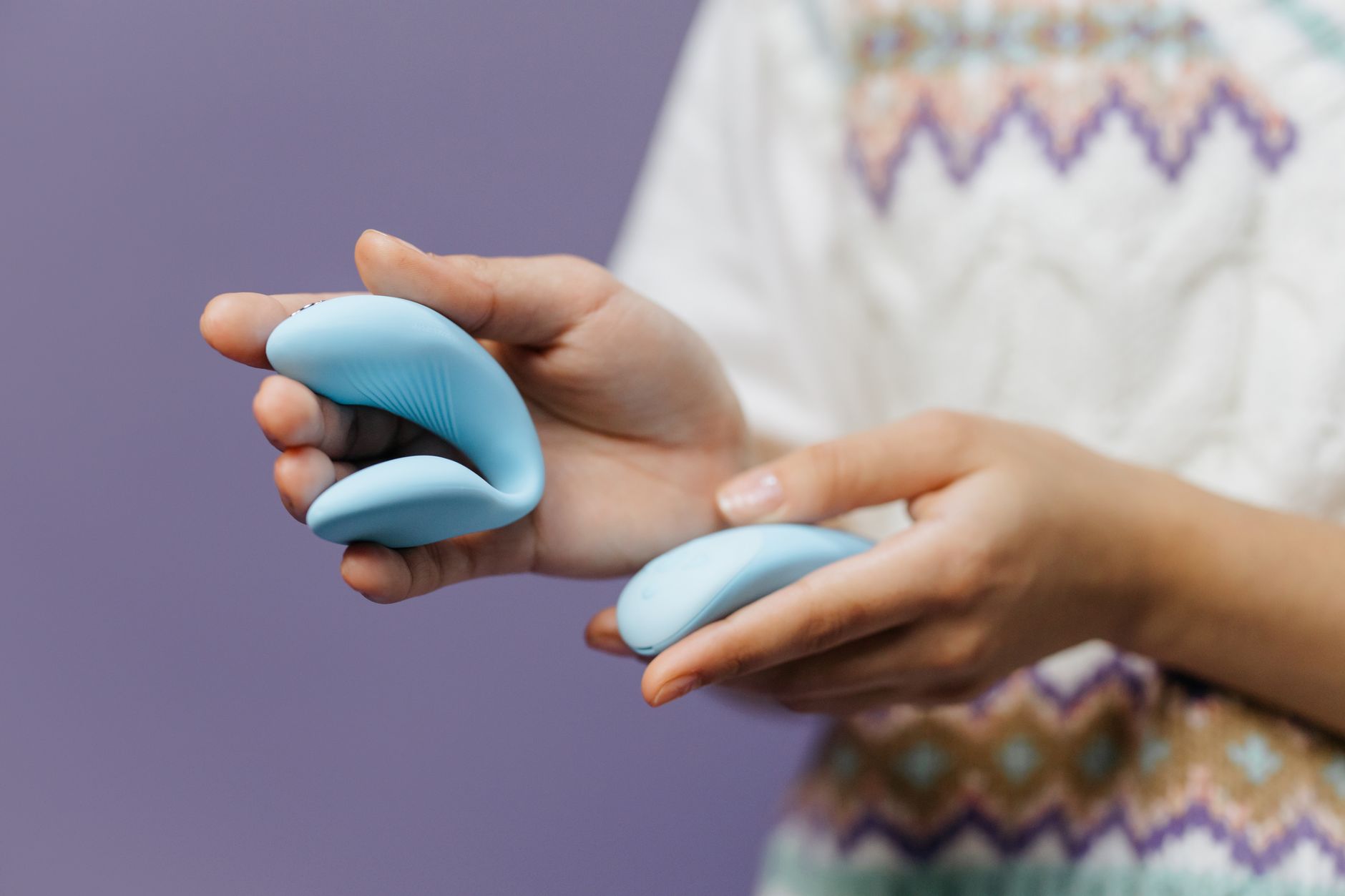
Photo by cottonbro studio on Pexels
Partners can be part of the solution too. Having them introduce a clitoral vibrator into partnered play—letting them control it while you focus on receiving and sensing—can feel fundamentally different from solo use and often reawakens pleasure more quickly.
Common questions about reduced sensation and vibrators
Why does sensation feel duller after using vibrators for a long time?
Your nervous system adapts. If you use the same vibrator at the same intensity for years, your brain learns to filter it out as background noise. This is called accommodation. The fix is variation: change patterns, take breaks, try different tools, and rotate between vibration and other forms of touch. Think of it like your favorite song—if you listen to it every day for six months, it stops hitting the same way. Novelty reawakens response.
Can a clitoral vibrator like the Lemon actually restore sensation I've lost?
Yes, but with a caveat. If numbness comes from nerve damage (rare), a vibrator won't fix it. If it comes from tension, desensitization, reduced blood flow, or psychological distance, a vibrator combined with the strategies above usually does help restore sensation within weeks. The vibrator is a tool that introduces novel stimulation while you address the underlying cause.
Is it normal for sensation to feel different on one side of the clitoris than the other?
Completely normal. The clitoris has asymmetrical nerve distribution, and tension, injury, or scar tissue can affect one side more than the other. Start vibration on the less numb side and gradually work toward the side that feels more distant. This trains sensitivity on the quieter side without overwhelming it.
Does reduced sensation mean I can't orgasm anymore?
No. Orgasm is possible even with reduced sensation—it just takes different conditions. You might need longer warm-up time, deeper arousal, mental focus, or partnered stimulation rather than solo. Some people find that reduced sensation actually allows them to last longer, which opens up different kinds of pleasure. Don't assume numbness equals inability.
How long should I use a clitoral vibrator when working on sensation recovery?
Start with 10-15 minute sessions, 2-3 times per week. As sensation improves, you can extend to 20-30 minutes. The goal isn't duration—it's consistency and varied stimulation. More frequent sessions with shorter durations often work better than rare marathon sessions.
What if I've been using numbing desensitizing sprays and now everything feels muted?
Stop immediately. These products numb the area so completely that recovery usually takes 2-4 weeks of no application. Your sensitivity will return. In the meantime, focus on non-genital pleasure and reconnection with your body. When you're ready to use a vibrator again, start at the lowest setting and stay patient.
The bottom line
Reduced sensation is not a permanent state. It's a symptom of tension, desensitization, or a physical change—all of which are addressable. A clitoral vibrator like The Lemon Suction becomes genuinely powerful when you use it as part of a broader approach: taking breaks, extending warm-up, practicing pelvic floor relaxation, and creating variation in stimulation.
Your pleasure matters. And you deserve to feel it sharply and fully again. Start this week. Commit to one of these strategies—maybe the three-day break, or the extended warm-up—and notice what shifts. Sensation doesn't return overnight, but it does return. And when it does, it often feels richer than it did before because you've learned how to protect it and expand it intentionally.
If you're struggling and want to talk through your specific situation, reach out. We're here to help.