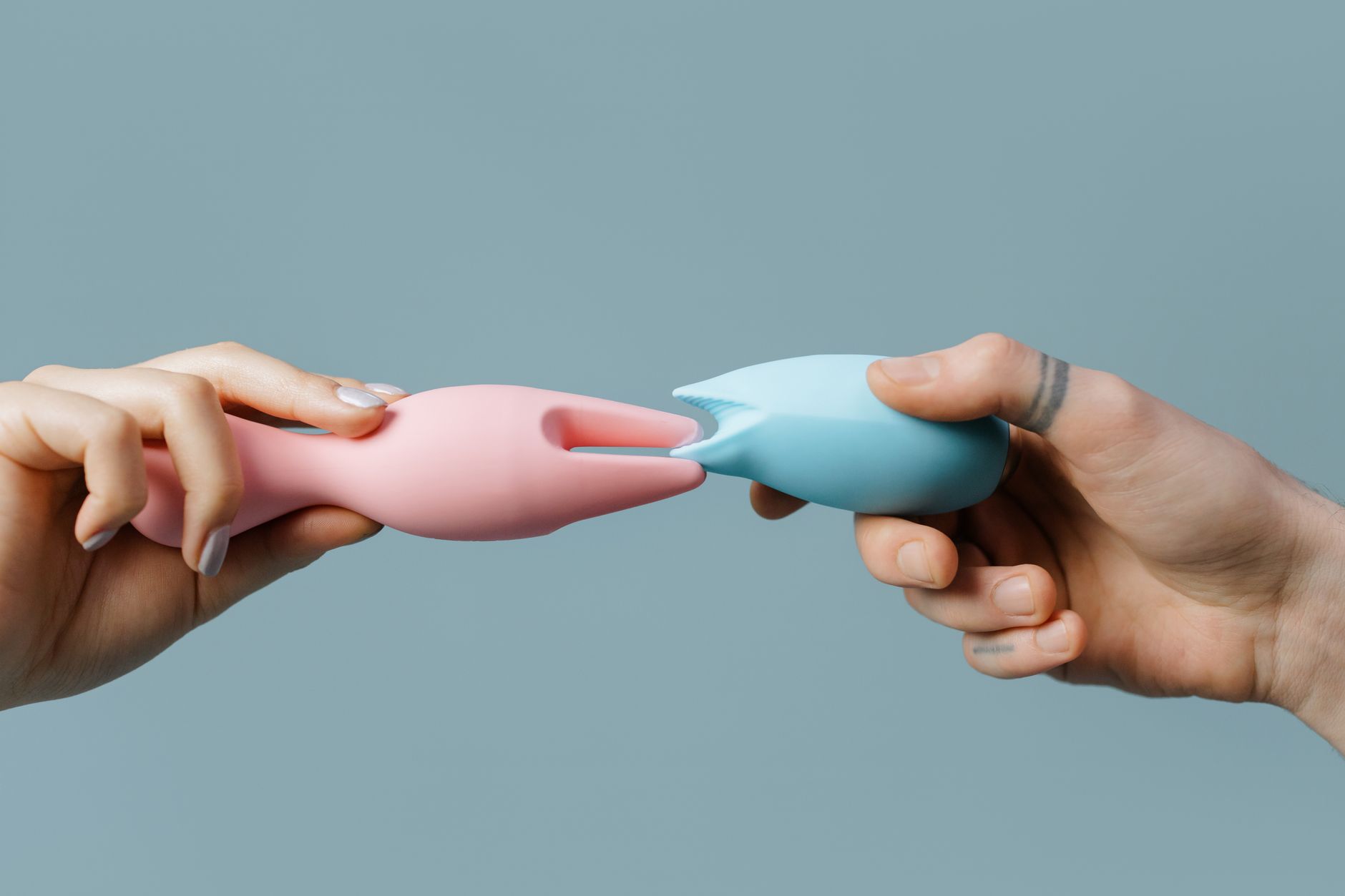
Let's be real about slow arousal with a partner
Most couples either rush sex or overthink it. The middle ground, where you're both building toward something together without faking interest or spending an hour on foreplay that starts to feel obligatory, is weirdly hard to find.
Here's what I see in my practice: when a partner brings a clitoral vibrator like the Lemon into the equation, something shifts. It's not because the tool is magic. It's because having an external source of consistent stimulation creates a new rhythm that lets both people stay engaged differently. You're not performing for each other. You're moving together.
Why gradual arousal with a partner fails without the right framework
Slow arousal requires three things: time, presence, and something that keeps interest climbing instead of plateauing.
Without all three, one of you gets bored, one of you feels pressured to "catch up," and the whole thing collapses into either quickie sex or a awkward stop. This is so common that most couples just accept it as normal.
The Lemon changes the dynamic because it's predictable. Your body knows what it's getting from the tool, so your nervous system can relax instead of bracing for surprise or intensity shifts. That relaxation is where arousal actually happens. When your brain isn't managing unpredictability, it can focus on sensation and connection.
The three-phase approach to building arousal together
Phase One: Connection without stimulation (5-10 minutes)
Start clothed or partially clothed. This is kissing, touch, conversation. Nothing urgent. The Lemon stays in the drawer.
Why? Because your brain needs about five minutes to shift from daily thinking into sensory thinking. If you introduce the vibrator too early, it becomes the main event instead of an enhancement. You want your partner's touch and attention to establish the baseline first.
During this phase, you're also tracking each other's breath and mood. Is your partner actually here, or are they thinking about work? Are you present, or are you already goal-oriented toward orgasm? Reset if you need to. A minute of "should we do this" conversation beats an hour of disconnected physical contact.
Phase Two: Introduction and exploration (10-15 minutes)
Now the Lemon comes into play, but it's not about speed yet. Start it on the lowest setting. Most partners are surprised by how quiet and precise it is. There's no rumbling vibration that drowns out conversation.
This is where you actually talk. Not dirty talk if that feels forced. Just "how does that feel?" or "do you want lighter pressure?" or "can I use it while you touch me here?" Real-time feedback makes arousal feel collaborative instead of like one person is getting all the attention.
A common mistake: assuming the Lemon goes straight to the clitoris. It doesn't have to. Try it over the labia, the inner thighs, the perineum. Different patterns create different sensations. Suction-based stimulation like the Lemon works differently from vibration, so your partner might prefer a specific pattern that you discover together during this phase.
Phase Three: Building intensity together (10-20 minutes)
Once arousal is clearly building, you have options. The Lemon can stay on the same setting while a partner uses their hands and mouth elsewhere. Or you can increase the Lemon's intensity while maintaining other touch.
The key difference from quickie sex: you're not rushing to orgasm. You're extending this phase intentionally. This is where a lot of couples realize they've been missing something. When there's no performance pressure, arousal actually builds instead of plateauing.
Your partner can also use the Lemon on themselves while you touch them, which creates a different kind of presence. Everyone's getting sensation from the tool plus sensation from your partner's hands. That layering of stimulation is what makes this different from solo play.
Communication patterns that actually work
Here's what I hear from couples who get this right.
They don't ask permission for every touch. They ask for real-time information: "harder or softer?" "want me to keep going?" "does this feel good right now?" Not "can I touch you here?" The difference is that you're treating arousal as dynamic, not a binary yes-or-no question.
They also name what they notice. "I can feel you tensing up" or "you're breathing faster" or "that made you laugh." Noticing creates connection without judgment. It signals that you're paying attention.
The Lemon specifically invites a new kind of communication because it's a tool neither of you is operating, exactly. You're both responding to it. That shared response creates a neutral focal point. You can focus on your partner's pleasure without it being solely about your hands or mouth. It redistributes attention and pressure in a way that feels less performative.
Why this works better after a certain amount of time together
If you're new to a partner, introducing a toy early can feel awkward because you're still learning each other's baseline responsiveness.
If you've been together a while and sex has become predictable, introducing the Lemon with this structure gives you a reason to talk about what you actually want. That conversation, not the toy, is what rescues most couples.
There's also a practical element: once you've been intimate with someone, you know their texture preferences, their touch sensitivity, their rhythm. You can use that knowledge to make the Lemon integration feel intuitive, not like you're handing off intimacy to a device.
When to extend the phases and when to skip ahead
If you've been together for years and sex has become functional, you might spend more time in Phase Two than in Phase One. You already have a connection baseline. You need novelty, not reconnection.
If you're rebuilding after a period of disconnection (maybe you've been stressed, or one partner has felt anxious about pleasure), you might extend Phase One significantly. Spend fifteen minutes just touching before the Lemon enters the picture. Let arousal build organically first.
If you're both clearly already aroused, skip Phase One. You're wasting time. Start with touch and move to the Lemon quickly.
The phases are a framework, not a prescription. Adjust based on what you're actually experiencing in the moment.
What changes when you introduce the Lemon midway through sex
You don't have to plan this structure in advance. If you're already intimate and sex feels like it's plateauing, having the Lemon nearby means you can introduce it without stopping to fetch it.
Many partners describe this as a reset button. Arousal goes back up. Attention refocuses. It breaks the monotony of repetitive motion, which is especially valuable if your partner is close to orgasm but not quite there, or if one person feels their arousal dropping.
The difference between using it this way versus using it as your entire foreplay is that you're integrating it into existing connection, not replacing connection with a tool.
FAQ: Building arousal with a Lemon vibrator
How do I know if my partner is comfortable with a clitoral vibrator in partnered sex?
Don't assume. Introduce the idea before the moment. "I was thinking we could try using the Lemon together sometime. What do you think?" gives them space to ask questions or voice concerns without pressure. Some partners love it immediately. Others need time to feel safe with it. Neither response is wrong. If they're hesitant, respect that and revisit later.
Can we use the Lemon if my partner has trouble with stimulation sensitivity?
Absolutely. The Lemon's suction-based design is actually gentler than many vibrators because it doesn't create direct friction on sensitive tissue. Start on the lowest setting and keep it there if higher patterns feel too intense. Many partners with sensitivity prefer suction-based stimulation like the Lemon because it's more diffuse. You might also try using it through thin fabric, like underwear or a towel, to reduce intensity further.
What if my partner becomes too focused on the Lemon and ignores me?
This usually happens when the Lemon is introduced as the main event instead of as part of a larger interaction. If it feels one-sided, pause and redirect. "I want to use this together, not just watch you use it." Put your hands back into the picture. Use the Lemon in one hand while touching elsewhere with your other. Recreate the sense that you're both engaged in the experience.
How long should we actually spend building arousal?
There's no magic number. Fifteen to forty minutes is common for couples who want meaningful foreplay. That sounds long until you realize most people spend five to ten minutes max on actual connection before moving to sex. Even doubling your baseline makes a huge difference in arousal depth and orgasm quality. Set a timer if you need to. It forces you to stay present instead of rushing.
Should I tell my partner what patterns feel best on the Lemon, or let them experiment?
Both. Start by showing them what feels good. Then let them experiment. You'll probably discover new sensations together. The learning phase is actually intimate. You're literally discovering what works for your body together, which feels different from telling a partner what to do.
Is it okay to use the Lemon if penetrative sex isn't happening that night?
More than okay. If you're building arousal for extended partnered play that doesn't include penetration, the Lemon becomes even more central. Many couples find that clitoral pleasure with a partner present and engaged is more intense than penetrative sex. You're not using the tool as a substitute for something else. You're building intimacy around what actually feels best.
What changes after you get comfortable with this rhythm
Once you've built arousal gradually a few times together, it becomes your baseline. Sex stops feeling like something that needs to be efficient. You start expecting thirty or forty minutes together instead of ten.
Your partner also learns what the Lemon does to your body, so they can use it intuitively instead of asking permission constantly. That's when the rhythm becomes truly collaborative.
You might also notice that you're more present during sex overall. Because you're not racing to an orgasm, your nervous system stays open. That changes how sex feels emotionally, not just physically.
If you're working on rebuilding intimacy after disconnection, check out how the Lemon vibrator works when you're reconnecting sexually after years apart. The communication framework is slightly different when you're rediscovering each other.
For couples where one partner wants more control during sex, the Lemon also shifts dynamics in useful ways. Learn more in our piece on using a Lemon vibrator when you want more control during partnered sex.
Finally, if you're nervous about introducing any toy to your partnership, consider reading about how to introduce a Lemon vibrator to a new partner. The conversation framework works whether you're weeks in or years in.