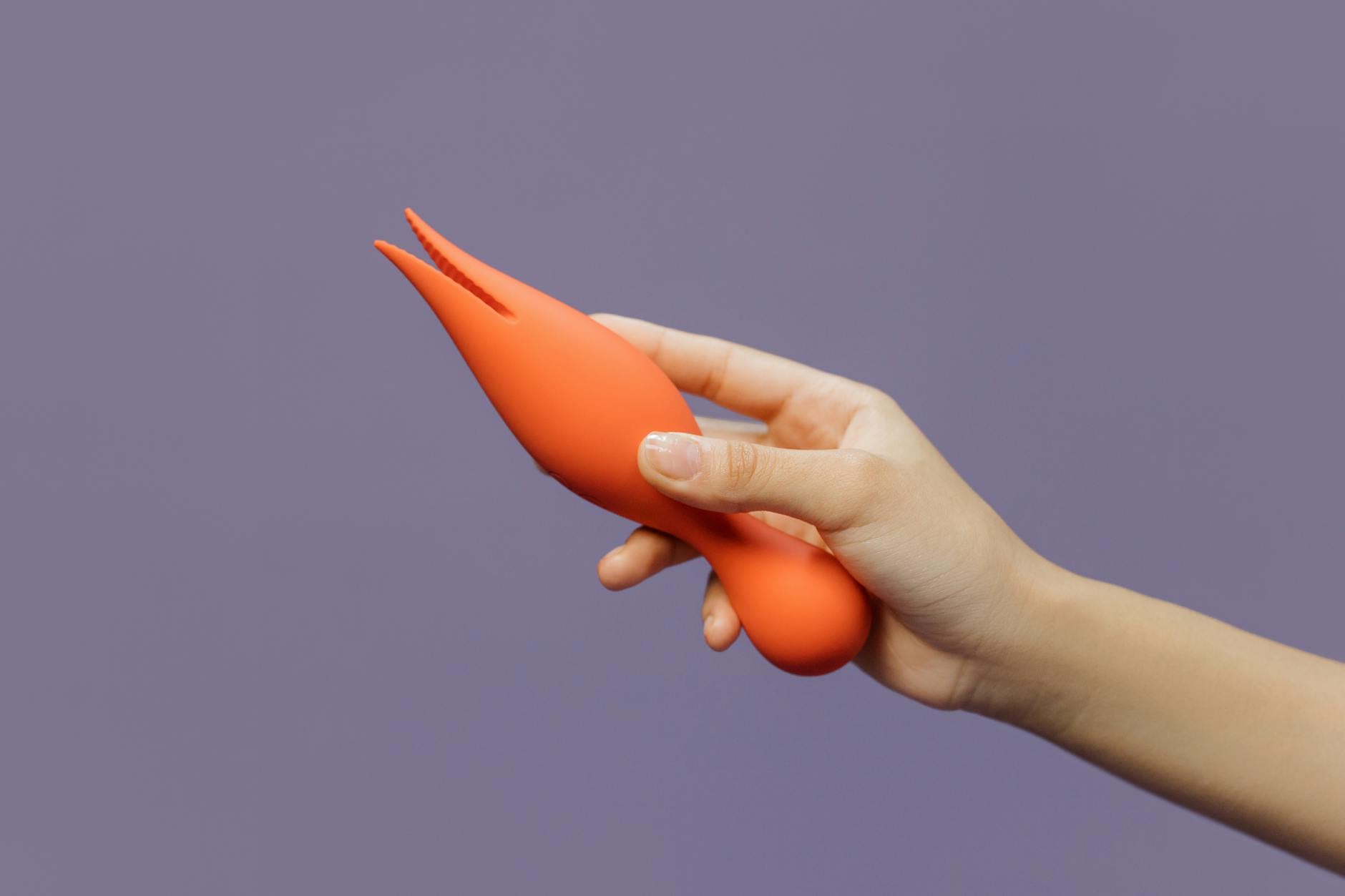
You like your partner. You want to come. But something in your body is moving at a different speed than theirs, or than the time you actually have together, or than what feels psychologically available that night. This isn't a dysfunction. It's just a mismatch that lemon vibrators handle remarkably well.
The air-suction technology in clitoral vibrators like The Lemon Suction works faster for most people because it creates direct, efficient stimulation without requiring the body to warm up through several layers of sensation first. You get straight to the point. That matters when you're working against a clock, a schedule, or just the fading focus of an evening.
Here's what I've learned from couples navigating this exact friction.
First, context. There's a difference between "I want to come because I'm enjoying this and want the full release" and "I want this to be over." One is about pleasure. One is about relief or obligation. If it's the second one, a vibrator won't fix it. That's a conversation with your partner, not a tool fix.
But if you genuinely want to experience orgasm during partnered sex and your nervous system just moves slower, or if time is legitimately limited, or if you're someone who needs direct clitoral stimulation to come at all (which is most people with vulvas, honestly), then a lemon vibrator changes everything.
The suction mechanism skips the slow buildup. You're not asking your body to gradually increase arousal. You're giving it the exact frequency and pressure it needs to cross the finish line. Some people report coming within 2-3 minutes of introducing The Lemon Suction during partnered sex, where they might have taken 15-20 minutes with touch alone.
Don't introduce a vibrator mid-sex for the first time if your partner hasn't signed on. Full stop. That's not about the toy being weird. It's about consent and assumptions.
Honestly though, most partners get it instantly once you frame it this way: "I want to come when we're together. Direct clitoral stimulation gets me there faster. It's not replacing you. It's letting us actually finish together." That's not rejection. That's logistics.
If your partner resists, check what's actually bothering them. Is it insecurity ("Does that mean I'm not enough")? Is it practical awkwardness ("Where do I touch you then")? Is it novelty discomfort? Those are three different conversations with three different answers.
For insecurity: remind them that orgasm is a physical response, not an emotional measurement. Many people with vulvas genuinely cannot come from penetration alone, no matter who's inside them. A vibrator is equipment, not a statement.
For awkwardness: you can take over the vibrator yourself during penetration, or your partner can hold it. Some couples find that a vibrator gives the receiving partner something to focus on besides performance pressure, which weirdly helps both people relax.
If you've never used a lemon clitoral vibrator before, start at pattern one or two. Do not skip to the highest intensity, even if you're trying to speed up. Higher intensity sometimes creates tension that slows you down.
Once you know what pattern feels best for your body, use that consistently. Your nervous system likes predictability. Jumping between patterns wastes time.
For positioning during partnered sex: you can hold the vibrator yourself against your clitoris while your partner is inside you, or lie back and let your partner hold it. Some people find that self-stimulation gives them more control over pressure and rhythm, which actually speeds things up because they're not managing someone else's hand position.
If your partner is holding it, give clear direction. "A bit higher," "Same spot, don't move," "Lighter pressure." Most people aren't mind readers. Specific feedback means they're not guessing, and you stay in your arousal instead of dropping back down to explain.
One weird thing that helps: breathe. Sounds obvious, but people holding tension in anticipation of orgasm often actually hold their breath. Deeper breaths increase blood flow and oxygen to the pelvic region. Faster breath can sometimes accelerate the buildup phase too.
If you're in a hurry, you might skip warm-up. Don't. Three minutes of touch or oral sex before introducing a vibrator isn't time lost. It's time invested. A body that's already somewhat aroused responds to vibration faster.
Use water-based lubricant even if you naturally lubricate. The air-suction sensation works best with a light layer of lube reducing friction between your skin and the device. Wetter means faster and more comfortable.
If you're using The Lemon Suction with a partner inside you, remind them that your clitoris might feel different to them when there's a vibrator in the area. It's subtle, but some partners feel thrown off. That's normal. It passes in about thirty seconds once they realize nothing is wrong.
Here's something I see constantly: people come faster when they're not managing someone else's ego or attention. Using a vibrator during partnered sex actually takes pressure off both of you. Your partner isn't responsible for bringing you to orgasm. You're both just here, together, with a tool that helps.
That shift in responsibility sometimes unlocks orgasms that were stuck behind performance anxiety. You stop thinking "Will I come? Am I taking too long? Is my partner getting tired?" and you just feel. And weirdly, feeling faster than thinking.
If your partner watches you come with a vibrator, they often find it hot. Not because the vibrator is more interesting than them, but because they get to see you actually have pleasure without the filter of performative sex. That's intimate in a way that fast, anxious sex often isn't.
Some people with vulvas come in under five minutes with direct clitoral stimulation. Others take ten or fifteen even with a vibrator. Don't use someone else's timing as your baseline.
If you're used to taking twenty minutes and you want to speed up to ten, a lemon clitoral vibrator can probably help with that. But if you're expecting five minutes every time, you're setting yourself up for frustration. Bodies aren't that mechanistic.
What usually happens: your average time compresses by about thirty to fifty percent. Not by ninety percent. Adjust expectations accordingly and celebrate the actual wins.
I need to say this plainly: if you're constantly rushing orgasm or skipping it to finish partnered sex faster, check in with your actual desire. Are you coming because you want to, or because you think you should?
If your partner's timeline is driving your speed constantly, that's a relationship dynamic that a vibrator won't fix. A vibrator is a tool for pleasure, not a workaround for incompatibility or pressure.
If you genuinely want faster orgasms and that tracks with what you actually enjoy, The Lemon Suction is honestly one of the best tools for that. But use it because it serves your pleasure, not because you're managing someone else's impatience.
Yes. Your partner might feel subtle vibration, but it won't change their sensation in any major way. Most partners adjust in seconds. If it bothers them, you can angle the vibrator more toward your body rather than toward them.
It's not marketing. Air-suction technology creates a specific type of stimulation that most people with vulvas respond to quickly. That said, "faster" is individual. You might shave ten minutes off your timeline, or you might shave two. The point is efficiency, not speed for its own sake.
Then you have options. Come first, then focus on them. Or take turns with the toy if they want it too. Or just enjoy the fact that you both got there, even if the timeline didn't match. The pressure to come simultaneously is largely cultural mythology anyway.
That depends on what the insecurity actually is. If they're worried about being "replaced," reassurance usually helps. If they're uncomfortable with sex toys in general, that's a longer conversation about boundaries and comfort. But you don't have to give up pleasure to manage someone else's insecurity indefinitely. You can be kind and still use the tools that work for your body.
Start with a basic model and use it solo first. Get to know how it feels, what patterns work, what intensity feels good. Then bring that knowledge into partnered sex. You'll feel more confident, and you'll communicate better about what you actually want.
Your body might develop a slight preference for that specific pattern over time, but that doesn't mean you can't come without it. Think of it like coffee. You might prefer it dark, but you can still enjoy tea. Using a vibrator regularly doesn't "ruin" your body's ability to respond to other types of touch. It just gives you an option that's often more efficient.