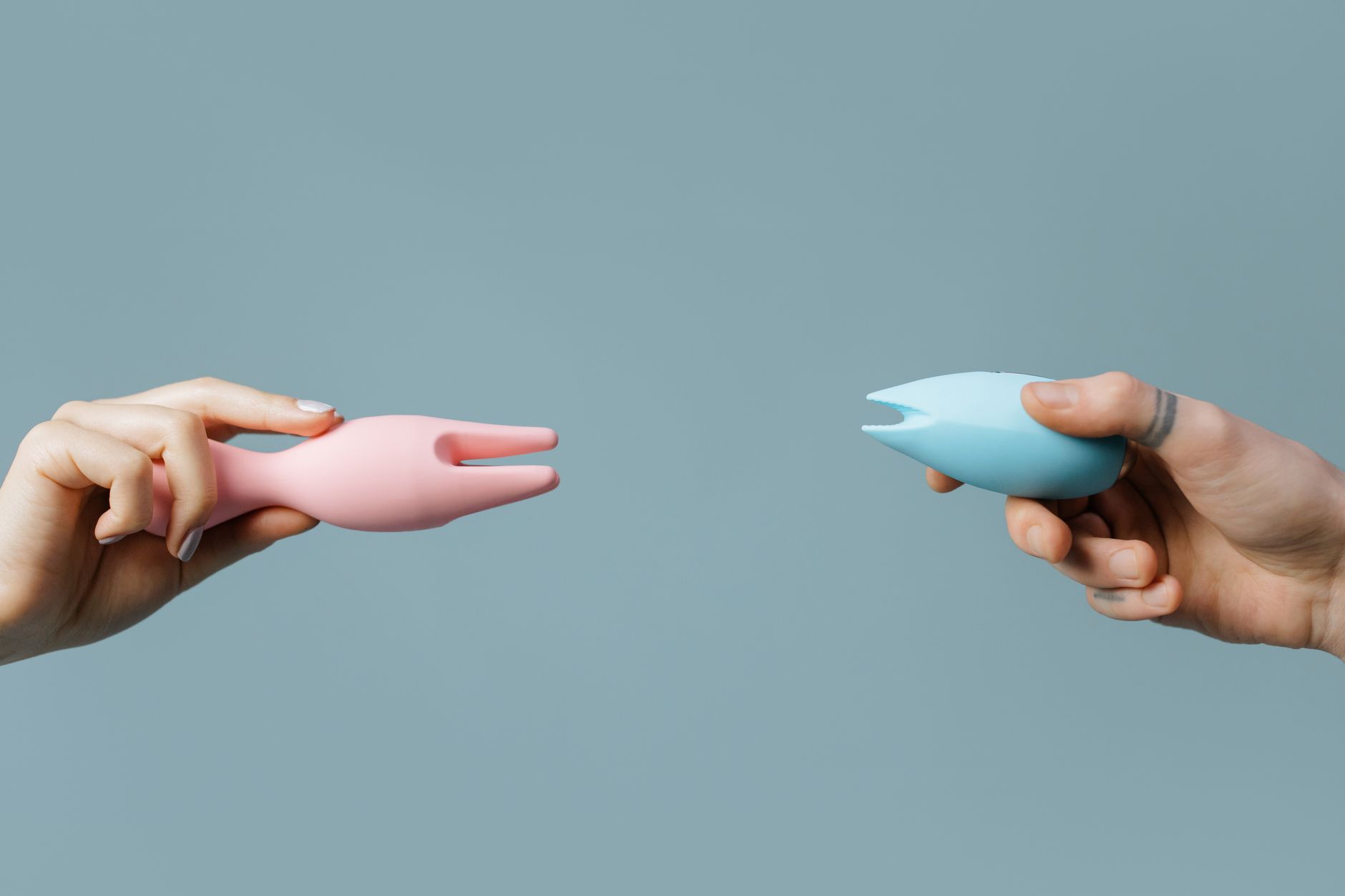
How to Use a Lemon Vibrator When You Want Solo Sessions That Last Longer
The difference between a quick finish and a slow burn isn't luck. Here's how to pace yourself, build intensity deliberately, and turn solo time into a longer, deeper experience.
Most people think longer sessions mean just turning on your lemon clitoral vibrator and waiting. That's like saying a good book is just about turning pages. The real magic happens when you learn to pace yourself, shift intensity intentionally, and build sensation in layers instead of rushing to the finish.
If you've been finishing faster than you'd like, the issue usually isn't your body. It's your strategy. And the good news is that strategy is completely learnable.
Three reasons this happens, and none of them are what you think.
First, you're probably starting at too high an intensity. When you grab The Lem and jump straight to patterns 3 or 4, you're already riding the wave that leads to orgasm in minutes. Your body builds arousal along a curve, not a cliff. If you skip the lower rungs, you lose the ability to extend the experience.
Second, you're likely applying consistent pressure in the same spot. Repetition creates a predictable neural pathway, which is exactly what makes orgasms arrive fast. Variety, by contrast, keeps your nervous system engaged and arousal climbing more slowly.
Third, you might be using vibration alone. Suction-based stimulation like what The Lemon Suction delivers works differently than pure vibration. It engages a broader nerve network, but only if you're using it strategically. Many people underestimate how much they can modulate the sensation by changing angle, rhythm, and pressure.
Think of a longer solo session in four phases. Each phase has a different job.
Phase One: The slow buildup (5-10 minutes). Start with pattern 1 or 2. Yes, the lowest settings. Place The Lem against your clitoris and let yourself feel what you're actually sensing, rather than chasing intensity. This is where you're building the foundation. Move slowly, stay in one general area, and resist the urge to amp it up. Your arousal is building below the surface even if it doesn't feel dramatic.
Phase Two: The exploration phase (5-8 minutes). Now you're still on a low-to-medium intensity, but you're moving. Shift the angle. Try different parts of your clitoris. Notice how the sensation changes when you move The Lem slightly up, down, or to the side. This phase is about discovery, not acceleration. Your nervous system is learning, and that learning keeps arousal from plateauing.
Phase Three: The plateau phase (5-10 minutes). This is where most people skip ahead to the finish. Instead, bump up to pattern 3 or 4, but then deliberately slow your movement. Apply The Lem, hold it for 20-30 seconds, then lift it away. Reapply. This on-off rhythm prevents your body from locking into the final countdown toward orgasm. It's counterintuitive, but backing off slightly before you feel like you need to extends everything that follows.
Phase Four: The finish (3-5 minutes). Only now do you increase intensity and consistency. Use patterns 4 or 5, find the angle that works best, and let your body finish naturally. Because you've spent time building, this final phase will feel deeper, last longer, and often be more intense than a rushed climax.
Add these four phases together and you're easily hitting 20-35 minutes of actual solo pleasure.
Here's a trick that changes everything for people who want more control. Once you're in Phase Two or Three, use The Lem in short bursts instead of continuous stimulation.
Apply the lemon vibrator for 30-45 seconds. Stop. Rest for 10-15 seconds. Reapply. This pattern breaks the escalation cycle that leads to quick orgasms. Your arousal doesn't stay on a steady upward trajectory. Instead, it plateaus, backs off slightly, then builds again. Each micro-cycle deepens the overall experience.
Many people find that after 3-5 cycles of this, they can sense layers to their pleasure they'd never noticed before. That's because your nervous system isn't overwhelmed by constant input. It has space to integrate sensation.
The angle at which you hold The Lem determines which nerves you're stimulating. Straight-on pressure hits different nerve endings than a side angle or an upward angle. By shifting angle every 60-90 seconds during Phase Two, you're essentially giving yourself a new toy every time you move.
This variety does two things. First, it prevents habituation. Your body doesn't get bored with the same input. Second, it recruits more of your nervous system. Longer, richer sessions use more of your capacity for sensation, not just more time.
Try this: spend 90 seconds at a straight angle, 90 seconds tilted slightly left, 90 seconds tilted slightly right, 90 seconds pressing upward. You're using the same toy, the same intensity, but your experience of it shifts four times in under six minutes.
This is where most technique guides fall short. You can have perfect pacing and lose it all if your mind is racing or your breathing is shallow.
During Phase One and Two, breathe deeply and slowly. Inhale for four counts, exhale for four counts. Your breath influences your arousal. Rapid breathing accelerates it. Slower breathing gives you more control. Think of breath as a tool for pacing, not just something that happens automatically.
Your mind matters too. If you're thinking about finishing, you'll finish. If you're thinking about sensation, you'll extend it. This isn't mystical. It's neurology. Your prefrontal cortex influences your arousal pathway. Focus on what you're actually feeling, not on the outcome.
Many people find that during Phase Two or Three, they naturally want to fantasize or watch something. That's fine. Just notice if the content is pushing you toward a quick finish or if it's maintaining a warm, sustained state. Adjust accordingly.
Not every solo session has to last 30 minutes. Some nights you want a quick release, and that's completely valid. The point of learning pacing isn't to make yourself sit through long sessions you don't want.
The point is having the choice. If you've always finished in five minutes and you want sometimes to last twenty, now you know how. If you want to finish fast tonight and slow down next week, you can do both.
The best solo routine is the one that matches what you actually want that day, not what you think you should want.
Your body isn't the same every day. Stress, sleep, cycle, hydration, and what you had for lunch all shift how quickly you're likely to finish.
For one week, keep a loose mental note of what worked. Which patterns and angles extended your session? Which ones made you finish faster? What role did your mood or setting play? This isn't about obsessing. It's about gathering data.
After a week, you'll start to recognize patterns. You'll know that Pattern 2 is your sweet spot for extending things, or that you need a 10-minute wind-up before shifting to higher patterns, or that angle changes matter way more than you thought.
That personalized knowledge is worth more than any generic guide because it's actually about your body, not a theoretical body.
The suction-based design of The Lem vibrator works differently than traditional vibrators. Suction engages a broader nerve network across the clitoris, which means you're not just stimulating one focal point. This broader engagement actually supports longer sessions because it distributes the load across more nerve fibers.
When you shift angles and intensities on a lemon clitoral vibrator, you're engaging different subsections of that broader network. That's harder to do with a purely vibrational toy, which is partly why people report that suction-based lemon sexual toys feel more sustainable for extended play.
Yes. Vibrators are efficient. They're designed to create sensation directly. This isn't a flaw in you or the toy. It just means if you want to extend sessions, you need strategy. People who use vibrators for years often discover that pacing and angle shifting matter far more than buying a different toy.
Not in the way most people fear. Regular vibrator use doesn't permanently numb you. What does happen is that your nervous system gets efficient at processing that specific stimulus. Taking breaks, varying intensity, and changing angles counteracts this entirely. If you use the same pattern at the same angle every single time, you might notice diminishing returns. Variety prevents that.
Whatever length brings you pleasure without frustration. For some people that's five minutes. For others it's forty-five. There's no "ideal." What matters is that you're satisfied with what you're experiencing, not that you hit some arbitrary time target. If you want to last longer, use the phases outlined above. If you want to finish faster, skip to Phase Four. Your preference is the only metric that counts.
This usually means you're taking too long between stimulation bursts, or your mind is wandering to non-arousing thoughts. Try shortening the rest periods from 15 seconds to five seconds. Or shift the pause-and-resume into pause-and-change-angle instead, keeping continuous contact while moving. Some people also find that maintaining a mental focus helps. This is genuinely individual, so experiment with what keeps you engaged.
Switching is usually better for extending sessions. Start low, move through the patterns as you progress through the four phases, but don't get locked into climbing linearly. You might spend five minutes on Pattern 2, shift to Pattern 3 for angle exploration, dip back to Pattern 2, then climb to Pattern 4 in the final phase. The variation keeps arousal from flatting out or accelerating too fast.
Completely different. You have total control of pacing when you're alone, which is actually harder for some people because there's no external push toward finishing. You're managing your own arousal curve with zero outside influence. This is a skill. Once you develop it solo, bringing that control into partnered situations becomes much easier.
Learning to extend your solo sessions isn't just about making them last longer. It's about developing intimacy with your own body. You're learning what you actually like, what rhythm sustains you, how your arousal works when you're not rushing.
That knowledge transfers everywhere. It makes partnered sex more satisfying because you know what you want. It makes solo time more fulfilling because you're not chasing a finish line. It makes your relationship with your body deeper because you're paying attention instead of going through motions.
If you've been finishing faster than you'd like, start with Phase One next time. Spend five minutes at Pattern 1. Notice what you actually feel instead of reaching for the next level. That one change often shifts everything.
Your pleasure deserves time. And now you know how to give it to yourself.