
Let's be real about the guilt
You spent years, maybe decades, making sure your partner felt wanted. Sex was about connection, about them, about "us." And now that you're solo, the idea of touching yourself feels weirdly transgressive. Like you're doing something you shouldn't. That's not unusual. That's exactly what happens when you've spent a long time calibrating your pleasure around someone else's presence.
Here's the thing though: solo pleasure isn't selfish. It's retraining your nervous system to remember that your body belongs to you first.
Why solo play feels different after years with a partner
When you've been in a long-term relationship, your arousal system gets used to external input. Someone else initiating. Someone else's rhythm. Someone else's eyes on you. Your body becomes responsive to that specific feedback loop. Solo play disrupts that loop, and for the first few times, it can feel awkward, empty, or even impossible.
On top of that, there's often a guilt layer. Maybe the relationship ended badly. Maybe it ended well but you're grieving it anyway. Maybe you're married but rediscovering solo play for the first time in twenty years. All of those contexts matter, and all of them can make touching yourself feel complicated.
The nervous system isn't broken. It just needs permission and practice to remember how to respond to its own touch.
The first week is not the template
Don't judge the whole experience based on day one. The first time you use a lemon vibrator solo after years in a relationship, you might feel nothing. You might feel self-conscious. You might feel like you're performing for someone who isn't there. That's actually a really common pattern. Your brain has spent years anticipating another person's reaction, and that habit doesn't vanish the moment you decide to solo explore.
Give yourself at least three to five solo sessions before you draw any conclusions about whether a lemon vibrator works for you. By session three, you'll know whether your body is warming up to the idea.
How to actually start (without the mental load)
Pick a time when you're genuinely alone and you know you have at least twenty minutes. Not rushed. Not checking the clock. Interrupted solo play trains your brain that this isn't a priority, which reinforces the guilt.
Start fully clothed. Sounds strange, but this reduces the performance pressure that a lot of people carry from years of partnered sex. You're not staging something. You're just touching your body through fabric and seeing what happens.
Use a lemon clitoral vibrator at the lowest setting. The Lemon Suction's design means you can start gentle and work up. Press it gently through your underwear first. No penetration, no big production. Just sensation.
Focus on the physical only for the first few sessions. Not fantasies, not visualization, not performance. Just.where does it feel good? Does the suction pattern match your actual preference, or do you need something different? Does pressure feel better than vibration? These are data points, not failures.
The guilt conversation needs its own paragraph
If you're carrying guilt about solo play, trace it back. Is it old religious messaging? Is it shame about the relationship ending? Is it a partner who made you feel bad about masturbation? Is it cultural conditioning that says women's pleasure is only valid in a partnered context?
Nameing the source of the guilt doesn't erase it instantly, but it does separate it from your body. Your body wanting to feel good isn't the problem. The guilt is something you inherited, not something you created.
Building a rhythm that works for your actual life
Here's what I tell clients: solo play is not homework. It's not another box to check. The goal isn't orgasm on a schedule. The goal is reconnecting with the fact that your body has its own pleasure, separate from anyone else's presence or validation.
Start with once a week. Same time if possible. Your nervous system loves predictability. After a few weeks, you might want more. You might want less. You might want it only on certain days. There's no "should." There's only what actually feels good to you.
With a lemon vibrator, the bonus is that the suction sensation is different enough from partnered sex that it can actually help your brain make a distinction. This is my time. This is my pleasure. This is a different kind of sexual experience entirely.
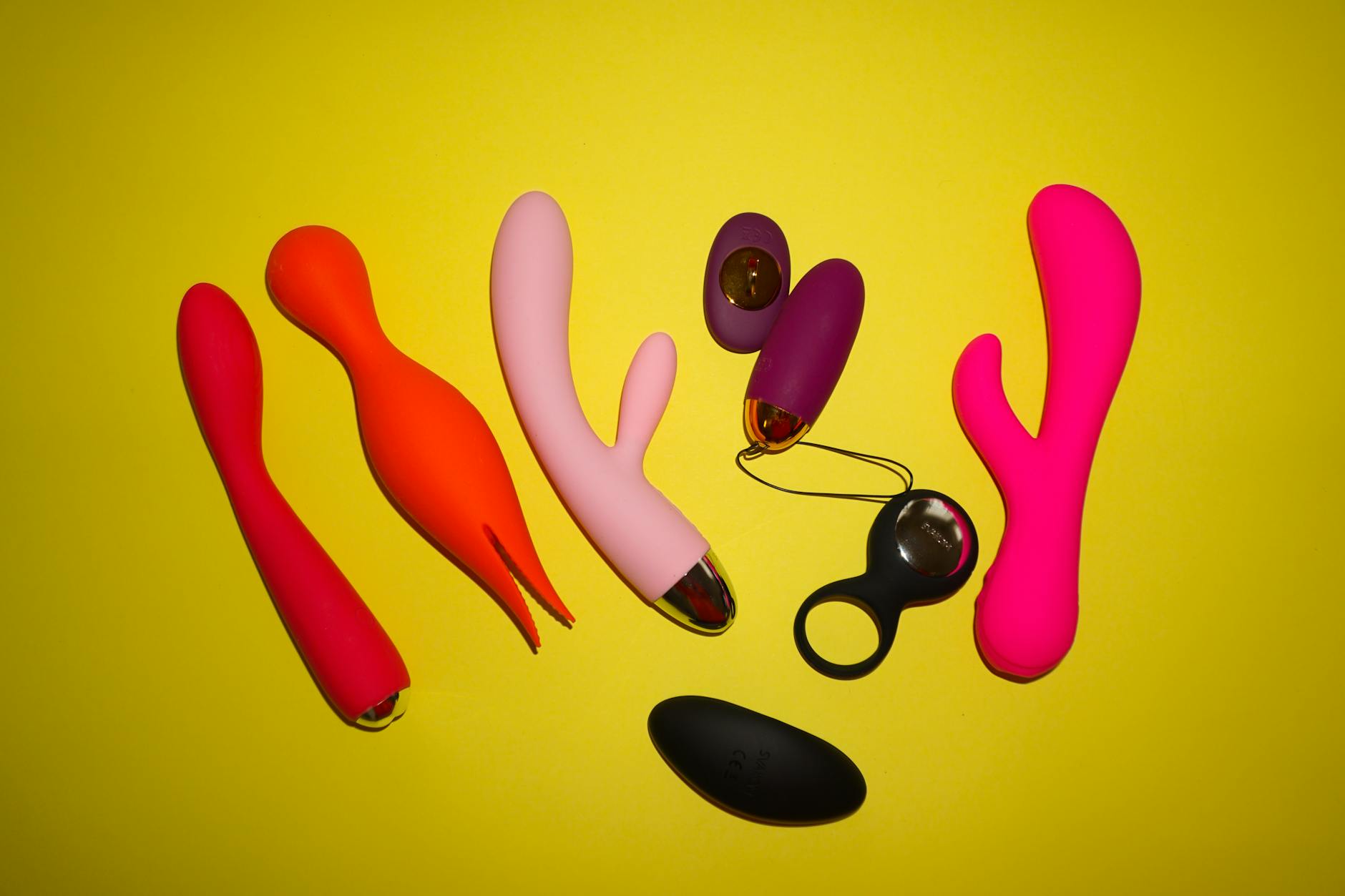
Photo by DRT.fm on Pexels
What to actually do with a lemon vibrator during solo time
Start with the basics. You're learning your body again. Here are three actual patterns to try.
Pattern One: The Slow Circle. Set a lemon vibrator to setting 1 or 2. Apply gentle pressure in a slow circular motion around the clitoral area, not directly on it. Let the vibration do the work. Breathe. When you find a spot that feels better than the others, stay there. No rush.
Pattern Two: The Press and Hold. Find a position that feels natural for your body. Press the lemon clitoral vibrator gently against your clitoris and hold it there for 10-15 seconds. Feel the sensation. Then move slightly and try again. You're mapping your body, literally discovering which spots respond best.
Pattern Three: The Intensity Build. Start at setting 1 and stay there for two to three minutes. Then move to setting 2. Then 3. Don't jump to high settings right away. Your nervous system is relearning how to respond. Slow progression teaches your body that arousal is a gradual thing, which often feels more sustainable than the intensity spike that can come with partnered sex.
The arousal timeline is probably not what you expect
After years with a partner, your arousal might have been quick. Their presence, their touch, their desire for you. That's external accelerant. Solo arousal usually takes longer because you're generating it entirely from internal sensation and thought. That's actually fine. That's actually normal.
Budget 10-15 minutes of just touching before you even turn on a lemon vibrator. Let your body warm up. Let your nervous system settle. Then introduce the vibration. You're not trying to fast-forward to orgasm. You're trying to rebuild the whole sequence.
When (and why) partnered sex might feel different now
If you're in a new relationship or considering moving back into a partnered dynamic, solo play actually helps. It teaches your nervous system that pleasure isn't dependent on someone else's rhythm. It teaches you what you actually want instead of what you think you should want. That information is gold when you're with a new partner. You can actually communicate preference instead of falling back into old patterns.
If you're rediscovering solo play while still married or partnered, that's a separate conversation with that person. But the research is clear: couples where both partners have an active solo pleasure practice actually report better partnered sex. Less resentment. Less "perform for me" dynamics. More actual desire.
The second month looks different
By week three or four, your body usually starts responding faster. Your brain stops waiting for external input and starts generating its own. This is when solo play actually gets interesting. You might discover that you prefer different intensities than you thought. You might find patterns that feel completely new. You might have stronger orgasms than you remember having in partnered contexts. That's not weird. That's you reconnecting with your own neurology.
This is also when a lot of people want to explore more. Try different settings on your lemon vibrator. Try longer sessions. Try fantasies or scenarios that feel completely for you, not performed for anyone. You're not trying to replicate partnered sex. You're trying to build something that belongs only to you.
FAQ: Starting solo play after a long relationship
Is it normal to feel nothing the first time I use a lemon vibrator solo?
Completely normal. Your nervous system is expecting external input. Your brain might be in observer mode instead of participant mode. Give it three to five sessions before you decide if it works for you. The sensation usually builds with practice and familiarity.
Should I use fantasy or pornography to get aroused during solo play?
Not in the first month. Your body already has so much external reference material from being with a partner. The point of early solo play is to reconnect with your own physical sensation without that extra layer. Once you're more comfortable, add whatever feels right. But start with just your body and the vibration.
What if I feel guilty every time I touch myself?
That guilt usually has a source. Pause and notice where it comes from. Religious conditioning? A partner who shamed it? Cultural messaging? Once you name it, you can separate it from your actual body's desires. Your body wanting to feel good isn't the problem. The guilt is inherited, not organic. It can be unpacked.
How often should I be using a lemon vibrator if I'm solo again?
There's no "should." Start with once a week. After a few weeks, you might want more or less. The goal isn't frequency. The goal is reconnecting with pleasure that belongs to you. Some people find once a week is their rhythm. Others want more. Both are fine.
Can solo play help me figure out what I actually want in future relationships?
Absolutely. Solo play teaches you what your body responds to, what intensities actually feel good, what patterns make sense for you. That information is incredibly valuable if you ever move into a partnered dynamic again. You can actually communicate preference instead of defaulting to old patterns.
What if I've been with a partner for so long that I don't really remember what I like?
That's exactly what solo play is for. You're not trying to remember. You're trying to discover. Use a lemon vibrator as an exploration tool. Try different patterns. Try different intensities. Try different body positions. Pay attention to what makes your nervous system actually light up versus what feels obligatory. Your preferences are still in there. You just need to listen.
The actual point
Solo pleasure after years in a relationship isn't about replacing partnership. It's about remembering that your body has its own intelligence, its own desires, its own capacity for sensation that has nothing to do with being desired by someone else. A lemon vibrator is just a tool to help you tune back in. The real work is giving yourself permission to take up space in your own pleasure.
You spent years making sure someone else felt wanted. Your body deserves the same attention. Not as performance. Not as obligation. Just as a fact: you exist, and your pleasure matters. Start there.